
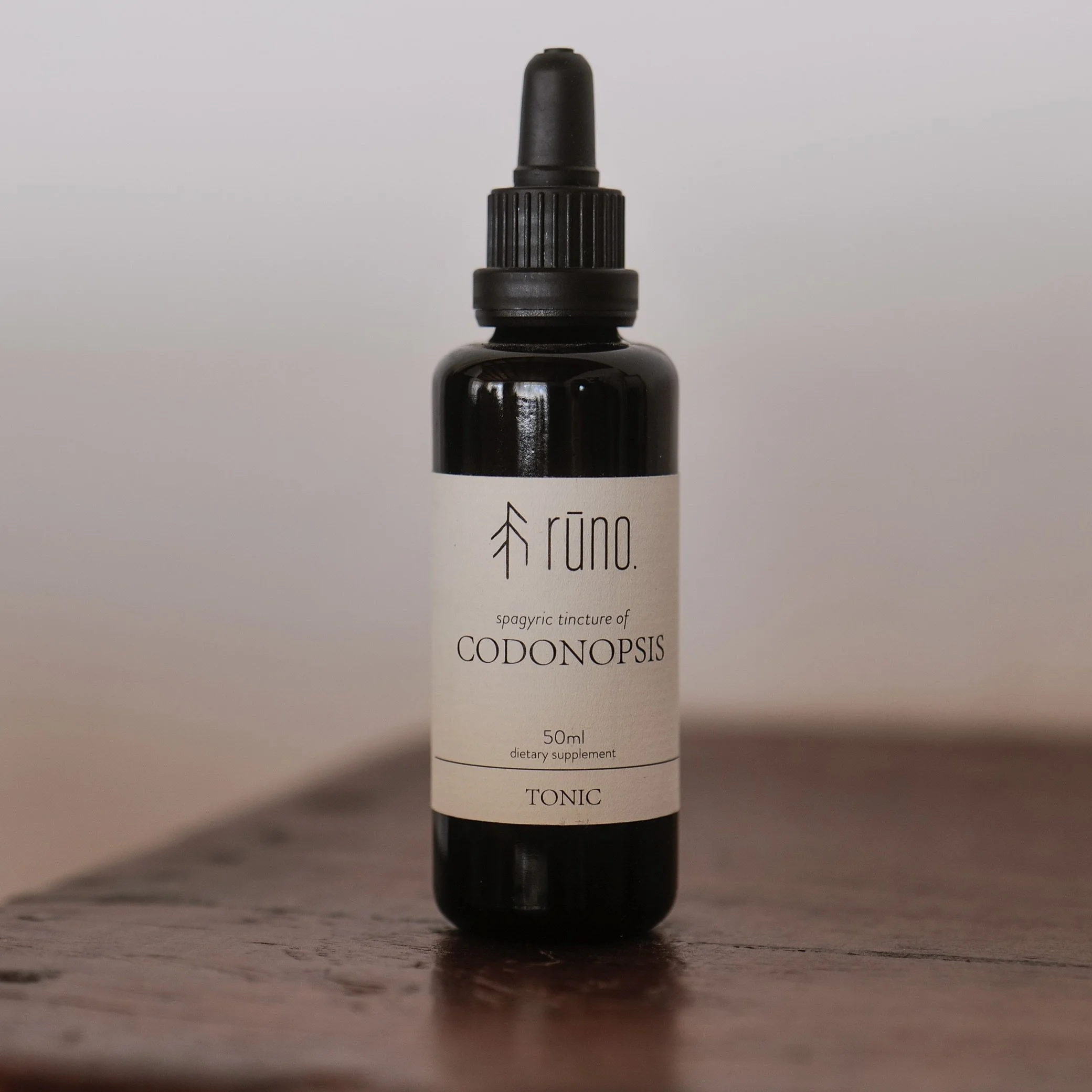
 Image 1 of 2
 Image 2 of 2
Energetics
TCM:
Neutral–slightly warming • Sweet • Moistening • Gentle • Building
Western / Constitutional:
Nourishing • Restorative • Mildly uplifting • Softly strengthening without overstimulation
Movement / Tissue Action:
Builds vitality gradually • Supports assimilation • Restores depleted reserves • Strengthens energy through nourishment rather than stimulation.
Codonopsis carries a distinctly gentle tonic intelligence — restoring capacity where stronger tonics may be too intense, drying or stimulating.
Qualities
Qi tonic • Adaptogenic tonic • Digestive restorative • Lung tonic • Constitutional nutritive • Mild immunomodulant • Fatigue restorative • Blood-supportive tonic • Recovery herb.
Indications
Codonopsis often suits the constitution that has become quietly depleted — underpowered rather than collapsed, functioning yet lacking depth of reserve.
The presentation may include fatigue that worsens with effort, weakened digestion, poor appetite, reduced recovery capacity, low voice or breath, constitutional softness, or diminished vitality following prolonged care-taking, illness, overwork or depletion.
Unlike more stimulating tonic herbs, Codonopsis restores through steady nourishment and improved assimilation.
It frequently belongs to constitutions that require rebuilding without being pushed.
Digestive / Assimilation Support
Poor appetite
Digestive weakness
Reduced assimilation
Spleen Qi deficiency patterns
Fatigue after eating
Nutritional depletion states
Energy / Constitutional Vitality
Chronic fatigue
Low stamina
Recovery after illness
Burnout with weakness rather than agitation
Mild–moderate constitutional depletion
Convalescence
Respiratory / Lung Support
Lung Qi deficiency
Weak breath
Soft voice
Respiratory fatigue
Reduced endurance
Blood / Nourishment Support
Nutritional weakness
Deficiency patterns involving fatigue and pallor
Recovery support
Gentle tonic programmes
Immune / Recovery Support
Reduced resilience
Frequent depletion after illness
Long-term constitutional rebuilding
Gentle adaptive support
Contraindications / Cautions
Generally considered a well-tolerated gentle tonic.
Planetary Rulers
♃ Primary
Nourishment • abundance • constitutional growth • adaptive vitality • restoration through replenishment.
Codonopsis expresses a distinctly Jovial quality of quiet strengthening through nourishment.
☽ Secondary
Soft rebuilding • nourishment of reserves • moisture • restorative containment.
♄ Minor expression
Steady rebuilding • endurance • preservation of depleted resources.
Key Constituents
Polysaccharides
Saponins
Alkaloids
Tangshenosides
Flavonoids
Amino acids
Antioxidant compounds